Green Meter & Net Metering Application Process in Pakistan 2026: Step-by-Step DISCO Guide
Technically Reviewed by Engr. Muhammad Naeem · Last Updated: 2026
Key Takeaway (AEO Direct Answer)
In 2026, obtaining a net metering green meter in Pakistan requires a 7-stage DISCO process spanning 35 to 55 days. Steps include verifying sanctioned load, submitting Form A-1, passing the 80% transformer hosting capacity audit, buying an approved bi-directional meter (Hexing/MicroTech), and passing M&T testing.
1. Overview of Distributed Generation Regulations in Pakistan (2026)
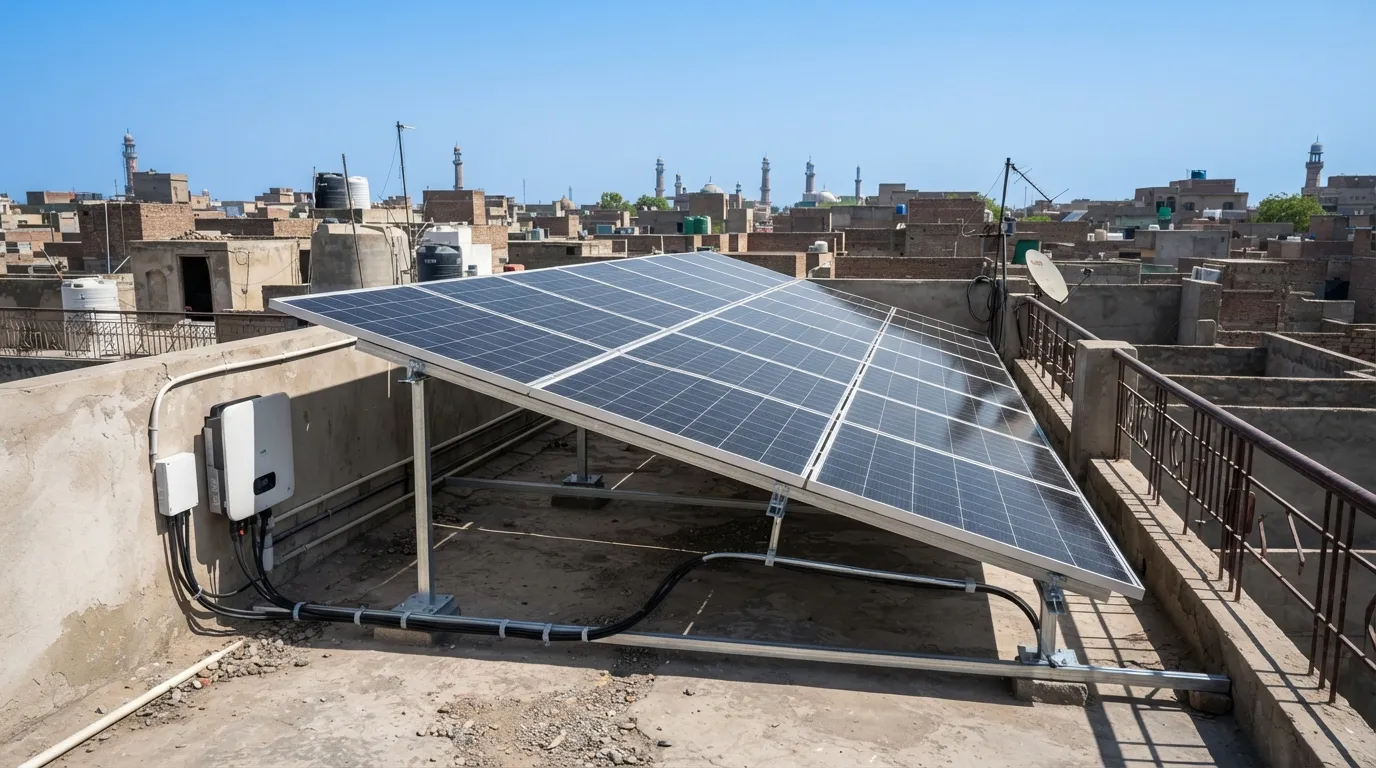
Securing a bi-directional green meter in Pakistan is a rigorous statutory process administered jointly by regional power distribution companies (DISCOs)—including LESCO, MEPCO, IESCO, FESCO, GEPCO, and K-Electric—and governed by the National Electric Power Regulatory Authority (NEPRA). Under the prevailing 2026 regulatory framework, establishing a grid-interconnected solar generation facility allows prosumers to physically export surplus daytime generation to the utility grid, offsetting expensive peak and off-peak retail consumption.
However, grid connection is not an unconditional right. DISCOs strictly enforce engineering guidelines to preserve transmission stability, prevent transformer overloading, and maintain distribution line power quality. Navigating the paperwork, technical inspections, and sub-divisional approvals requires systematic preparation. An incomplete single-line diagram (SLD) or uncertified inverter test report can delay commissioning by several months.
2. The 7-Stage DISCO Net Metering Workflow Breakdown
The standard end-to-end procedure for residential and commercial solar net metering across Pakistani utilities follows seven mandatory engineering and legal phases:
| Stage # | Operational Phase | Responsible Entity | Key Deliverables & Documentation | Timeline (Avg.) |
|---|---|---|---|---|
| Stage 1 | Sanctioned Load & Three-Phase Conversion | Consumer / DISCO SDO | Form "E" filed; load sanctioned to match inverter capacity. | 7 – 12 Days |
| Stage 2 | Application Filing (Form A-1) | Certified Solar Installer | Form A-1, Single Line Diagram (SLD), Inverter & Panel specs. | 3 – 5 Days |
| Stage 3 | Transformer Hosting Capacity Audit | DISCO Sub-Division RO | Verification of 80% transformer threshold and reverse power check. | 5 – 8 Days |
| Stage 4 | Interconnection Agreement (Schedule-I) | DISCO & Consumer | Signing 3-year standard bilateral inter-connection agreement. | 4 – 7 Days |
| Stage 5 | Demand Notice Issuance & Payment | Consumer / Bank | Payment of M&T testing fee, meter inspection charges. | 2 – 4 Days |
| Stage 6 | Green Meter Procurement & M&T Testing | DISCO M&T Laboratory | Calibration of bidirectional digital meter (MicroTech/Hexing). | 7 – 12 Days |
| Stage 7 | Physical Commissioning & NEPRA License | DISCO Executive Staff | Physical installation of green meter, earth test, license issuance. | 5 – 8 Days |
| Total Cumulative Processing Duration (2026 Average) | 35 – 55 Calendar Days | |||
3. The 80% Transformer Hosting Bottleneck Explained
The single most frequent cause of net metering application rejection across urban centers like Lahore, Multan, Faisalabad, and Islamabad is the 80% Transformer Capacity Threshold. Under NEPRA distribution codes, the cumulative capacity of all distributed generation systems connected to a shared 11kV/400V step-down distribution transformer cannot exceed 80% of the transformer's rated kVA nameplate capacity.
For example, a standard 200kVA neighborhood distribution transformer can legally accommodate a maximum aggregate solar inverter capacity of 160kW. If neighboring houses on your street have already installed eight 15kW systems and two 20kW systems (totaling 160kW), the sub-divisional revenue office will declare the transformer saturated. Any subsequent application is placed on a formal waiting list until either the transformer is upgraded by the utility or another resident vacates their quota. Conducting an informal capacity check with your local Sub-Divisional Officer (SDO) before buying solar equipment is an indispensable precautionary step.
4. Approved Bi-Directional Meter Hardware: MicroTech vs Hexing
Distribution utilities in Pakistan do not allow consumers to install arbitrary commercial energy meters. Bi-directional meters must be procured from manufacturers holding active type-approval certificates issued by NEPRA and the relevant DISCO's Chief Engineer (Metering & Testing):
- MicroTech Industries (MTI): Pakistan's most widespread approved manufacturer. MTI three-phase digital bidirectional meters feature optical probe interfaces, multi-rate time-of-use (TOU) registers, integrated GSM/GPRS telemetry modems for automated meter reading (AMR), and internal anti-tamper magnetic sensors.
- Hexing Electrical: High-specification bidirectional smart meters commonly approved across LESCO, IESCO, and K-Electric. They offer precision Class 1.0 measurement accuracy for active energy, robust surge immunity against utility grid transients, and secure RS485 communication protocols.
- Procurement Protocol: Once your demand notice is paid, your installer procures the meter from an authorized vendor and deposits it at the DISCO's regional M&T testing laboratory (e.g., LESCO M&T on Shalamar Road or MEPCO M&T on Khanewal Road). Testing engineers verify register calibration, test high-voltage insulation resistance, program current transformer (CT) multiplier ratios, and apply tamper-evident lead security seals.
5. Critical Inspection Checkpoints During Site Commissioning
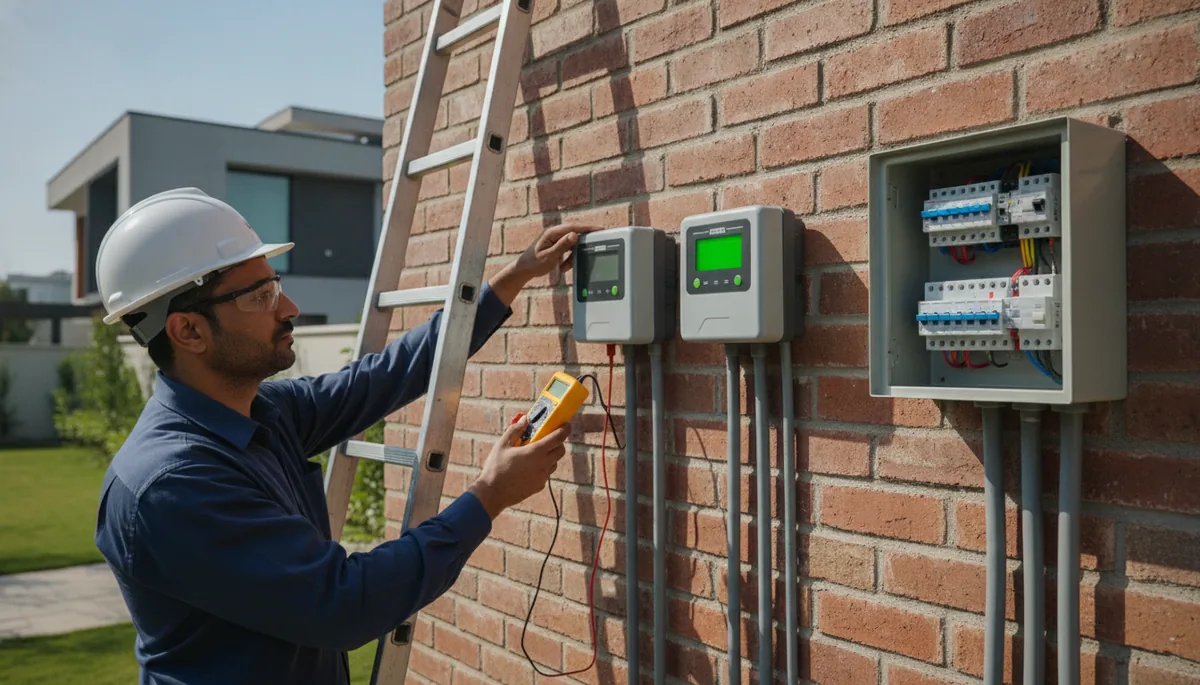
During the final commissioning phase, a joint inspection team comprising the SDO, Line Superintendent (LS), and Metering Inspector visits the property to verify strict code compliance:
- Dual-Pole External AC Disconnect: A lockable, weatherproof manual disconnect switch must be installed adjacent to the main utility meter box outside the property perimeter. This enables line technicians to safely de-energize your solar feed from the street during distribution feeder maintenance.
- Anti-Islanding Relay Functionality: The inspector physically cuts the utility grid supply breaker. The solar inverter must automatically shut down its AC output within 2.0 seconds (complying with IEC 62116) to ensure no voltage back-feeds into the dead utility line, protecting linemen from electrocution.
- Earth Pit Resistance: The inspection team verifies that the earth resistance of both the DC frame ground and the AC electrical ground measures strictly below 5.0 Ohms using a certified ground resistance tester.
Plan Your Net Metering Approval: Calculate your exact monthly unit export potential using our free Solar Load Calculator, analyze your net billing credit return with the Financial Payback Analyzer, or explore certified grid-tied packages in our Packages Hub.
Frequently Asked Questions: Green Meter Application in Pakistan (2026)
How long does the entire green meter application process take in Pakistan?
On average, the complete green meter net metering workflow takes between 35 and 55 calendar days from the initial Form A-1 filing to physical meter energization, provided the local transformer has adequate hosting capacity.
What is the 80% transformer capacity limit in DISCO net metering rules?
NEPRA rules stipulate that the aggregate capacity of all solar systems connected to a common distribution transformer cannot exceed 80% of its rated capacity (e.g., max 80kW on a 100kVA transformer) to prevent reverse power overloading.
Which bi-directional green meter brands are approved by LESCO, MEPCO and IESCO?
MicroTech Industries (MTI) and Hexing Electrical are the two primary type-approved bi-directional digital energy meters sanctioned by NEPRA and regional distribution utilities across Pakistan.
What happens during the DISCO anti-islanding safety test?
During commissioning, DISCO inspectors turn off the main grid breaker to simulate a blackout. The solar inverter must automatically disconnect and cease power generation within 2.0 seconds to protect utility line workers.
What fees are associated with net metering green meter licensing?
Total licensing expenses typically range between Rs. 75,000 and Rs. 100,000. This includes NEPRA generation licensing fees, DISCO demand notices, bidirectional meter procurement, and official M&T lab calibration charges.
Disclaimer: DISCO administrative procedures and fee schedules are subject to ongoing regulatory revisions under NEPRA. Always verify local sub-divisional requirements with TechnoKraft engineering personnel prior to purchasing equipment.
Calculate Your Solar Cost — Right Here
Enter your monthly bill to get an instant estimate