Off-Grid vs Hybrid Solar Systems in Load-Shedding & Rural Areas of Pakistan
Technically Reviewed by Engr. Muhammad Naeem · Last Updated: 2026
Key Takeaway (AEO Direct Answer)
In rural Pakistan, off-grid systems with low-frequency transformer inverters or batteryless VFD solar tube wells are optimal for severe 8-12 hour load-shedding and 140V brownouts. Hybrid systems require a stable grid (>180V) to synchronize, making robust off-grid architecture superior for rural farms.
1. The Rural Energy Reality Across Pakistan's Agricultural Heartland
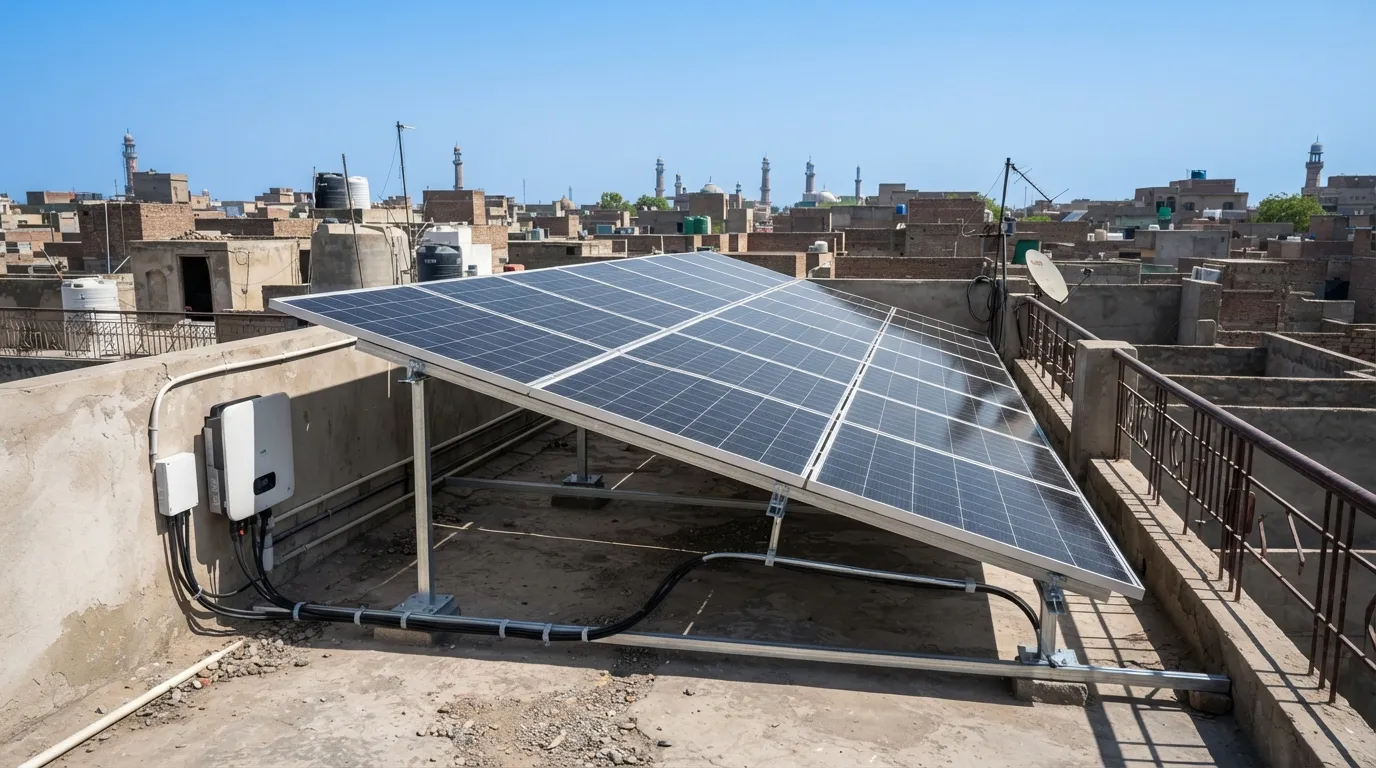
While urban prosumers in Lahore, Islamabad, and Karachi focus primarily on on-grid net metering and utility bill offset, Pakistan's rural heartland—encompassing vast agricultural belts across South Punjab, rural Sindh, Balochistan, and Khyber Pakhtunkhwa—confronts a completely different energy crisis. Rural distribution feeders operated by MEPCO, SEPCO, HESCO, and PESCO suffer from chronic 8 to 14 hours of daily scheduled load-shedding, unannounced transmission breakdowns, severe voltage sags (brownouts where line voltage plummets to 140V–160V AC), and absent three-phase power.
For rural households, dairy farms, agricultural tube well operators, and poultry sheds, standard transformerless on-grid and urban hybrid inverters frequently fail. These modern electronic inverters require stable grid voltage (typically 185V to 250V AC) and precise 50Hz frequency to synchronize. When rural voltage dips to 150V, standard inverters trip into protective shutdown. In this harsh operating environment, selecting between heavy-duty Off-Grid architecture and specialized rural Hybrid topology dictates operational viability.
2. Comprehensive Comparison: Off-Grid vs Hybrid in Rural Environments
The table below outlines the core technical, operational, and financial distinctions between Off-Grid and Hybrid configurations operating under rural Pakistani conditions.
| Engineering Dimension | Rural Off-Grid Solar Architecture | Rural Hybrid Solar Architecture |
|---|---|---|
| Utility Grid Dependency | 0% Independent: Operates without any grid. | Partial: Requires grid synchronization to export. |
| Brownout Tolerance (Low Voltage) | Unaffected: Generates pure 230V AC internally. | Trips into fault mode if grid voltage < 180V AC. |
| Inverter Transformer Topology | Low-Frequency Heavy Copper Transformer | High-Frequency Electronic Transformerless |
| Motor Surge Handling Capacity | 300% Nominal Surge (Over 20 Seconds) | 150% – 200% Surge (Under 10 Seconds) |
| Battery Storage Requirement | Mandatory for nighttime domestic loads. | Can operate batteryless if grid is present. |
| Agricultural Tube Well Sizing | Direct VFD Drive (100% Batteryless Operation) | Cost-prohibitive with heavy battery banks. |
| 2026 Turnkey Cost Benchmark (10kW) | Rs. 1,400,000 – 1,700,000 (With LiFePO4) | Rs. 1,550,000 – 1,850,000 (With Net Meter) |
3. Low-Frequency Transformer Inverters: Surviving Brownouts & Surges
In rural Pakistan, electronic transformerless inverters (standard urban models) frequently experience catastrophic component failure. When inductive agricultural motors (flour mills, chaff cutters, heavy submersible pumps) cycle on long rural distribution lines, they induce massive transient voltage spikes and brownouts that blow internal high-speed switching FETs.
The engineered solution for rural homesteads is a Low-Frequency Inverter equipped with a massive, heavy copper-wound toroidal transformer. Unlike lightweight electronic inverters (weighing 15 to 25 kg), low-frequency inverters weigh 50 to 85 kg. The massive iron-core transformer acts as an impenetrable electromagnetic buffer, absorbing utility grid voltage spikes up to 4,000V and delivering an astonishing 300% surge overload capacity for 20 continuous seconds. This allows a 6kW low-frequency inverter to effortlessly start a 3HP heavy agricultural motor without breaking a sweat.
4. Agricultural Tube-Well Solarization: Variable Frequency Drives (VFD)
Water pumping for crop irrigation represents the single largest operational cost for Pakistani farmers. Running a 15HP to 25HP diesel tube well engine costs approximately Rs. 2,800 to Rs. 4,200 per hour in High-Speed Diesel fuel. Over an agricultural wheat or cotton season, diesel pumping costs easily surpass Rs. 800,000 to Rs. 1,500,000 per crop cycle.
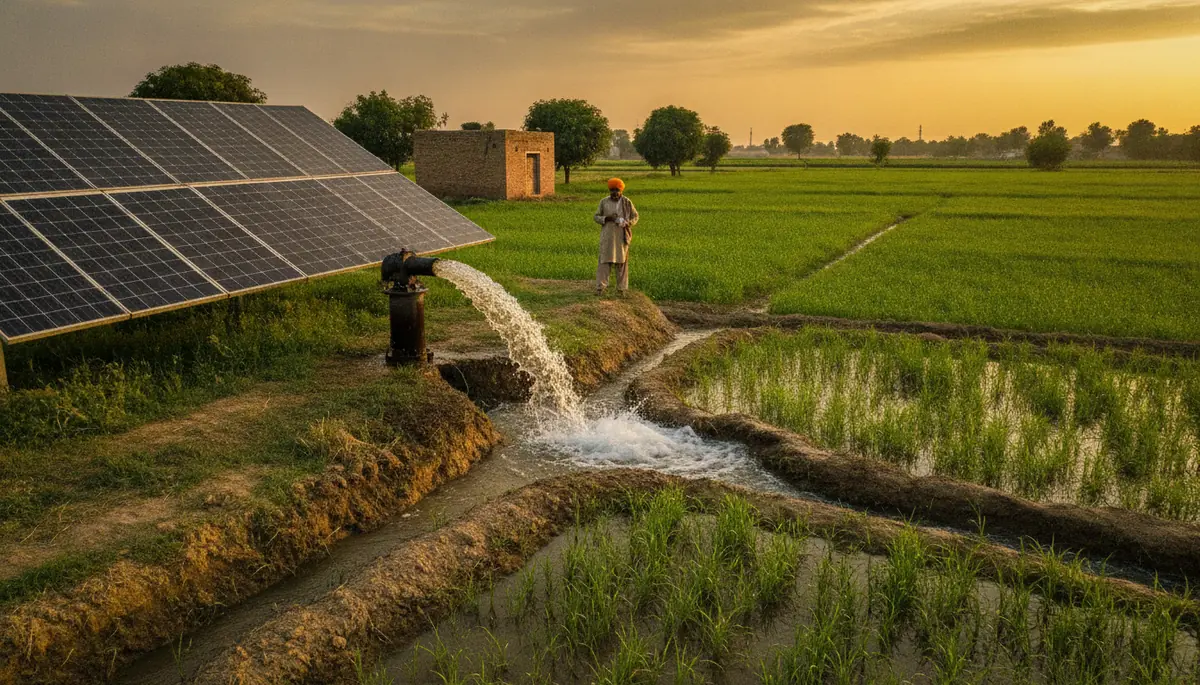
Solar tube well engineering circumvents both diesel expense and expensive battery banks through Solar Variable Frequency Drives (VFD):
- 100% Batteryless Direct Solar Pumping: Solar PV modules are connected in high-voltage DC series strings (typically 500V to 750V DC) wired directly into a specialized solar pumping VFD inverter (such as INVT, Frecon, or Veichi). No batteries are used!
- Maximum Power Point Motor Throttling: Built-in MPPT software continuously matches motor speed to instantaneous sunlight irradiance. At 8:00 AM, the VFD soft-starts the 20HP three-phase submersible motor at 30Hz, gradually accelerating to full 50Hz rated speed by 10:30 AM as irradiance peaks, delivering thousands of gallons of irrigation water into field canals for 8 to 9 hours daily at ZERO fuel cost.
- Rapid Payback: Replacing diesel fuel with a solar VFD tube well delivers complete capital recovery within 14 to 18 months!
5. Rural Grid Interfacing: Managing 140V Brownouts & Single-Phase Lines
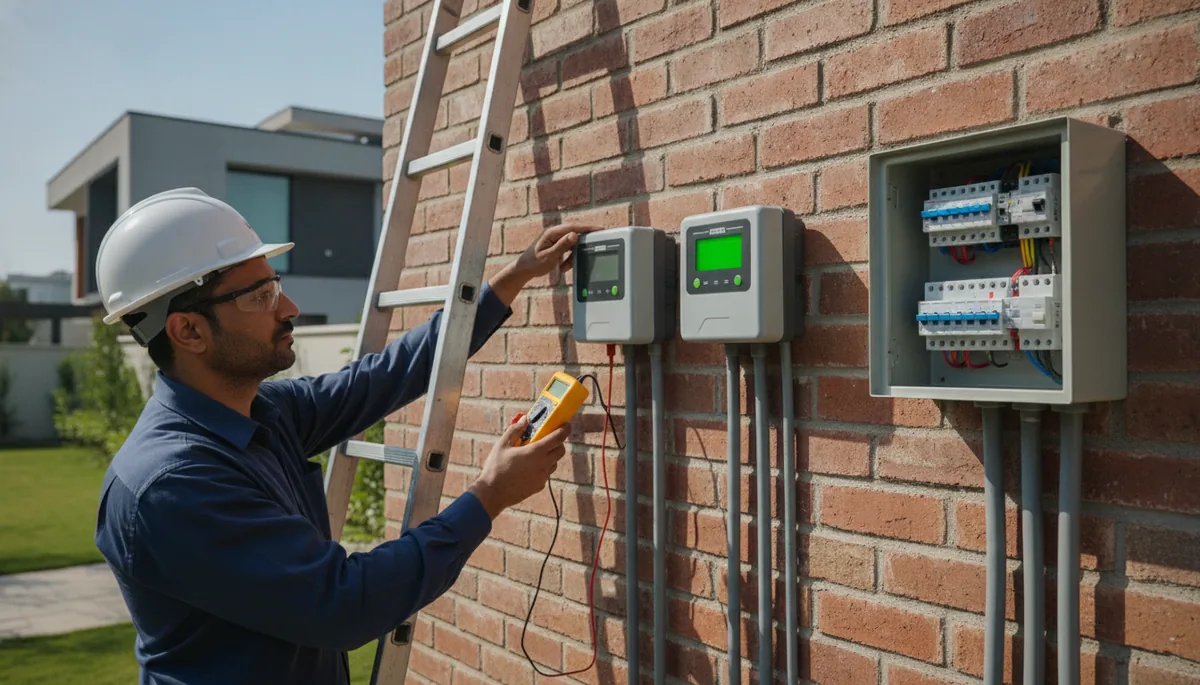
For rural properties with grid connections that suffer from chronic voltage drops (where grid voltage hovers between 140V and 170V AC), standard hybrid inverters reject the grid. To successfully interface with rural grid lines, certified engineers deploy two specific configurations:
- Wide-Range AC Input Inverters: Utilize specialized hybrid inverters featuring an ultra-wide AC input voltage acceptance window (90V to 280V AC). The inverter accepts low-voltage utility power, cleans the waveform, and steps it up internally to deliver stabilized 230V AC pure sine wave power to household appliances.
- Servo-Motor Heavy Voltage Stabilizers: Installing a heavy copper-wound oil-cooled servo stabilizer before the inverter AC grid input stabilizes turbulent rural grid lines, ensuring the inverter remains connected to charge battery banks during brief utility availability windows.
Solarize Your Farm or Rural Home: Calculate your agricultural tube well motor capacity and panel string design using our Solar Load Calculator, model your diesel fuel savings with the Financial Payback Analyzer, or explore heavy-duty battery backup packages in our Batteries Hub.
Frequently Asked Questions: Rural & Off-Grid Solar in Pakistan (2026)
Can an agricultural tube well run directly on solar panels without batteries?
Yes, utilizing a Solar Variable Frequency Drive (VFD) allows 10HP to 30HP three-phase electric tube well pumps to run directly from high-voltage DC solar panel strings with zero battery storage, drastically lowering capital costs.
Why do standard urban inverters fail or trip in rural areas of Pakistan?
Standard urban inverters trip when rural grid voltages drop below 180V AC (brownouts) or when heavy inductive motors cause electrical grid surges. Rural installations require low-frequency transformer inverters or wide-input (90V–280V) models.
What is the payback period for a solar-powered agricultural tube well?
By eliminating expensive diesel fuel (costing Rs. 2,800 to Rs. 4,200 per hour), a solar VFD tube well pays for itself completely in approximately 14 to 18 operating months.
What is a low-frequency inverter and why is it better for rural homesteads?
Low-frequency inverters utilize heavy copper-wound toroidal transformers that can handle 300% motor surge capacity and absorb high-voltage lightning and grid spikes, outlasting electronic inverters under harsh rural conditions.
Can an off-grid solar system be converted to net metering in the future?
If three-phase utility grid infrastructure is extended to your area in the future, an off-grid system can be integrated with a grid-tied or hybrid inverter to qualify for bi-directional net metering green meter licensing.
Disclaimer: Agricultural water table depths, pump head dynamics, and motor power curves require precise hydraulic calculations. Consult TechnoKraft certified engineering staff for site-specific electrical design and load flow calculations prior to equipment procurement.
Calculate Your Solar Cost — Right Here
Enter your monthly bill to get an instant estimate