How to Claim Warranty on Solar Inverters & Panels in Pakistan Without Rejection
Technically Reviewed by Engr. Muhammad Naeem · Last Updated: 2026
Key Takeaway (AEO Direct Answer)
To claim solar warranties in Pakistan without rejection, provide the original distributor sales tax invoice, document error logs and serial photos, ensure Type-2 SPDs and an earthing pit (<5 Ohms) were installed, and submit an RMA through the manufacturer's authorized national service center.
1. The Warranty Reality in Pakistan's Solar Sector
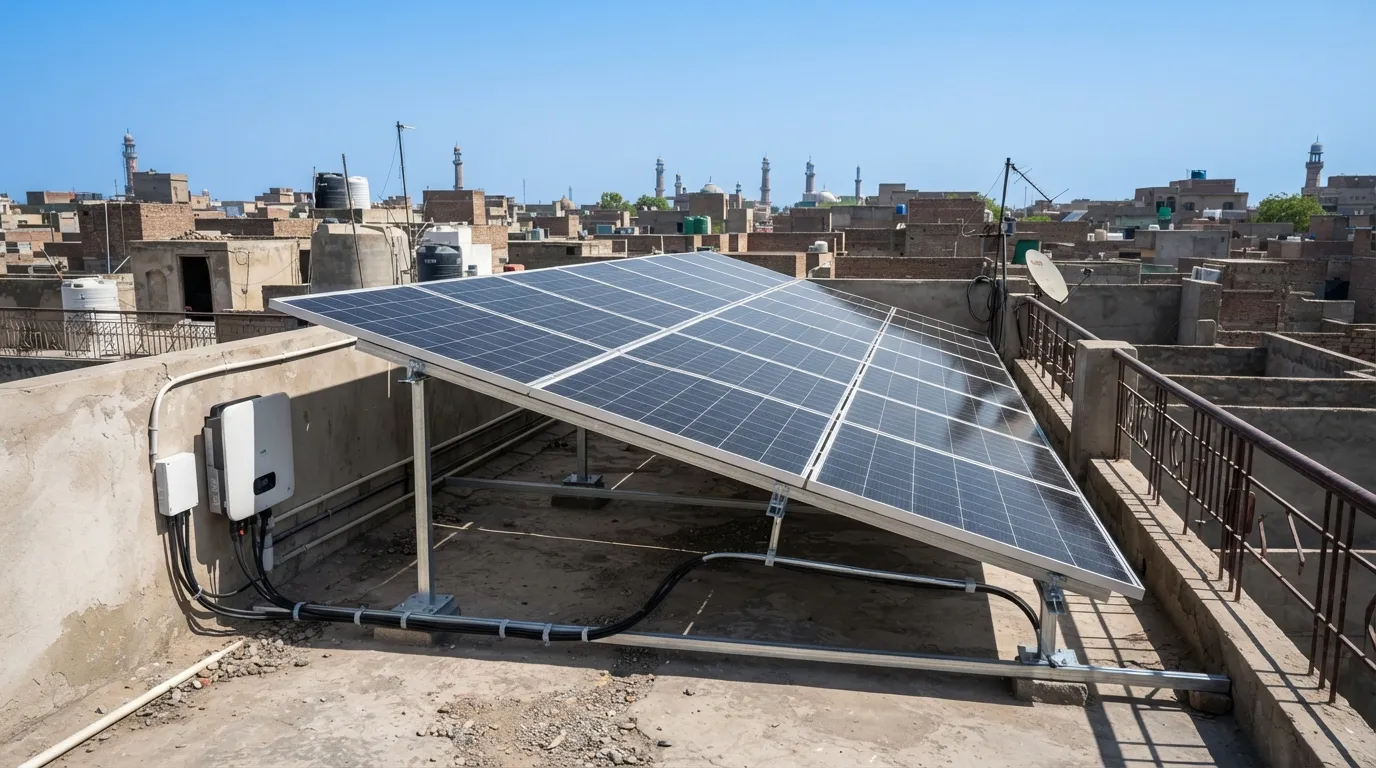
While global solar manufacturers offer long warranty terms (10 to 12 years product warranty on string inverters and 25 to 30 years linear performance warranty on Tier-1 panels), the reality on the ground in Pakistan is fraught with friction. Hundreds of consumers who encounter equipment failures (such as inverter motherboard burns, IGBT transistor breakdown, or solar cell hot-spotting) face outright warranty rejection when visiting authorized service centers in Lahore, Karachi, or Islamabad.
Warranty claims are legal and engineering contracts. Manufacturers do not cover damage caused by external grid instability, lightning strikes, improper field wiring, or uncertified installation practices. Understanding the precise forensic inspection protocols executed by official warranty service centers (such as GoodWe, Inverex, Longi, Jinko, and Solis) is essential for securing replacement hardware without financial loss.
2. The Top 5 Causes of Solar Warranty Rejection in Pakistan
Official service centers in Pakistan reject over 65% of initial residential warranty submissions based on five specific engineering violations:
| Rejection Cause | Forensic Physical Evidence Looked For | How to Protect Your Warranty Eligibility |
|---|---|---|
| 1. Missing or Substandard SPDs | Blown MOV varistors without external Type-2 DC/AC surge protection devices. | Install certified 1,000V DC and 400V AC Type-2 SPDs (Schneider/Suntree) inside combiner boxes. |
| 2. Improper Earth Grounding (>5Ω) | Internal surge damage with no verified earth test report or earth resistance >5.0 Ohms. | Maintain dual chemical earth pits; retain signed installation earth test certificate (<5Ω). |
| 3. Grey-Market / Unverified Importers | Serial number does not appear on official Pakistani distributor import manifests. | Procure hardware exclusively through authorized Tier-1 distributors with verified sales tax invoices. |
| 4. String Overvoltage (Cold Voc) | Dielectric puncture of internal DC bus capacitors caused by winter string overvoltage. | Design strings so maximum cold Voc at 0°C remains 15% below the inverter's maximum DC input. |
| 5. Physical Mechanical Damage | Micro-cracks, punctured backsheets, or dented aluminum frames from amateur handling. | Never walk or step on modules; document pallet condition with photos before unpacking. |
3. Step-by-Step Return Merchandise Authorization (RMA) Workflow
When an inverter or solar module experiences operational failure, execute this systematic 6-step RMA filing procedure:
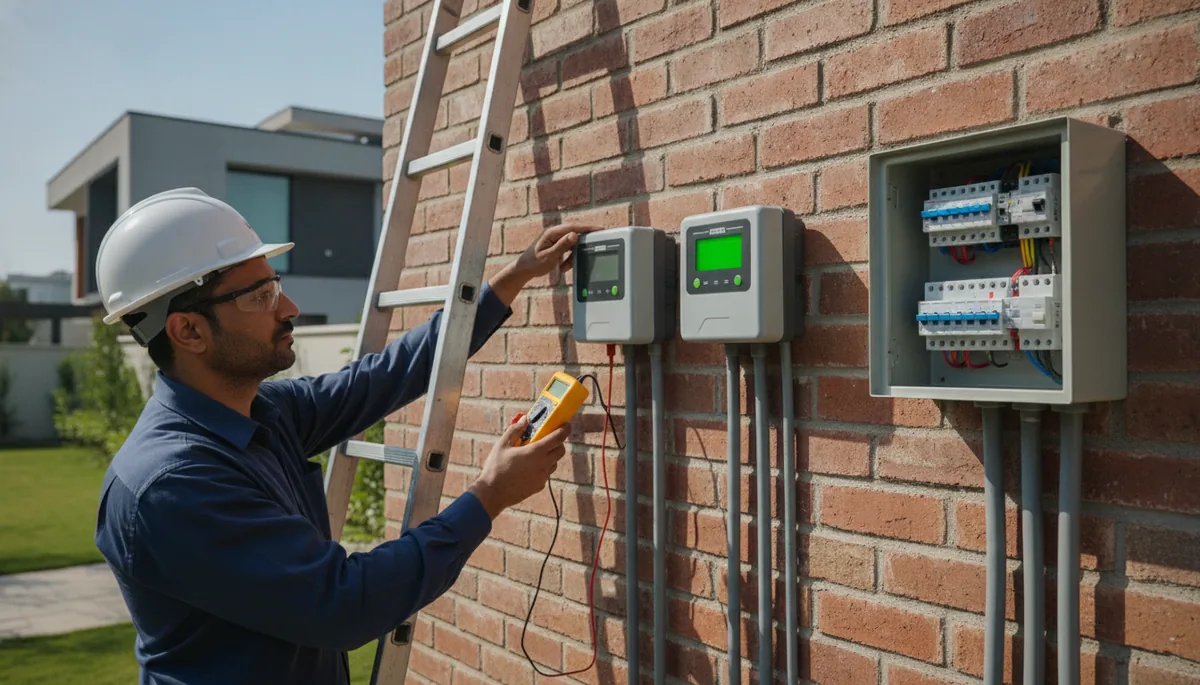
- Step 1: On-Site Visual & Diagnostic Documentation: Before touching or disconnecting any wiring, take high-resolution photographs and videos of the inverter LCD displaying the active fault code (e.g., Fault 08, Fault 09, Warning 04). Capture wide shots of the AC/DC distribution boxes, circuit breakers, and external Type-2 SPDs to prove code compliance.
- Step 2: Serial Number Identification: Photograph the manufacturer label on the side of the inverter or under the front glass of the solar module, ensuring the barcode and 16-digit alphanumeric serial number are sharp and legible.
- Step 3: Export Inverter Error Logs: Connect your smartphone to the inverter's local Wi-Fi datalogger via the manufacturer monitoring app (such as SolarGo for GoodWe, ShinePhone for Growatt, or SolisCloud). Export the internal event and fault log history into an Excel/PDF file.
- Step 4: Safe Equipment De-Commissioning: Execute the safe manual shutdown sequence (turn off AC load breaker, turn off AC grid breaker, turn off DC PV isolator, turn off battery breaker). Pack the unit in its original styrofoam shipping carton with all terminal blocks and connectors.
- Step 5: Submission to Authorized Service Center: Deliver the hardware to the manufacturer's official national service facility (such as GoodWe Service Center on Raiwind Road Lahore or Inverex Service Center in Karachi/Lahore). Submit the equipment alongside:
- Copy of original distributor sales tax invoice showing serial number.
- Printed commissioning report showing earthing resistance below 5 Ohms.
- Detailed symptom description and exported fault logs.
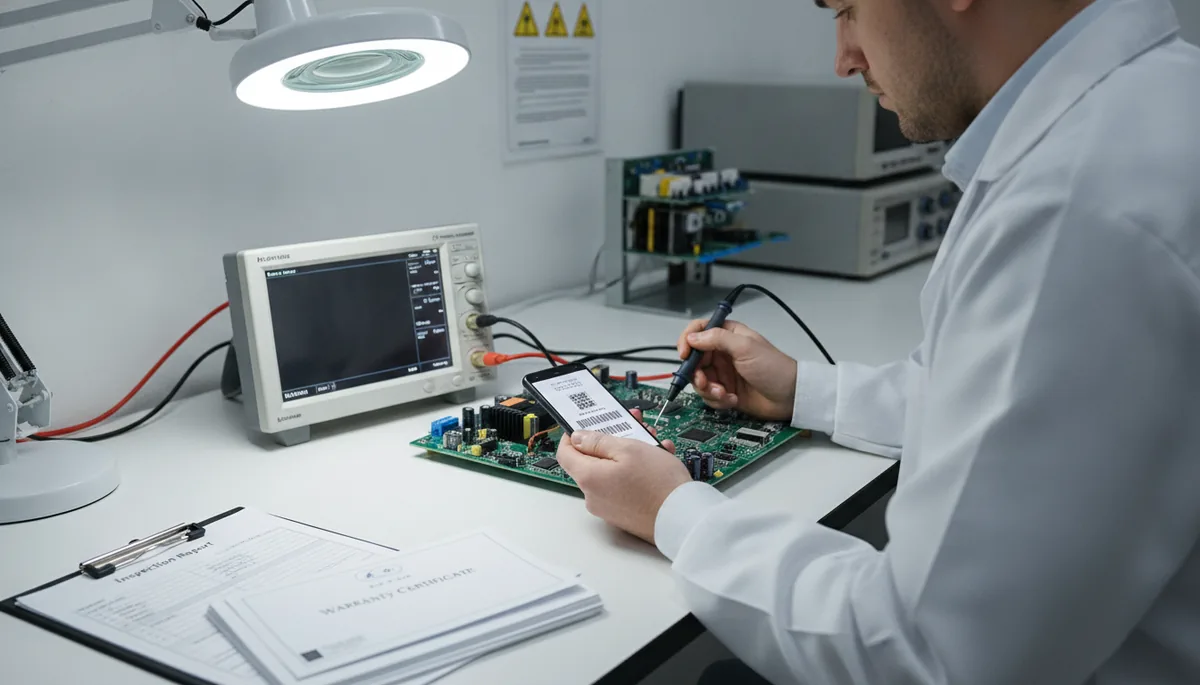
- Step 6: Diagnostic Bench Testing & Replacement: Service center technicians place the unit on an automated testing bench. If verified as an internal manufacturing or component defect, the unit is either repaired with genuine OEM boards or a new replacement unit is issued under RMA protocols within 7 to 14 business days.
4. Solar Panel Flash Testing & Degradation Claims
Claiming warranty for degraded solar panels is more complex than inverter claims because power loss occurs gradually. If your 10kW array is producing 30% less power than expected, follow these technical verification steps:
- Thermal Imaging Audit: Hire a certified solar engineering firm equipped with a calibrated FLIR thermal camera. Conduct an aerial or rooftop thermographic scan during midday peak irradiance (>700 W/m²). Defective cells, cracked silicon wafers, or blown bypass diodes will appear as glowing yellow-white hot spots (exceeding 85°C), providing undeniable visual proof of internal shunts.
- Independent Electroluminescence (EL) Testing: EL testing acts as an X-ray of the photovoltaic module, revealing micro-cracks, finger busbar breaks, and inactive cell fragments completely invisible to the naked human eye.
- Submitting Power Warranty Claims: If EL and thermal imaging confirm internal manufacturing flaws, Tier-1 manufacturers (Longi, Jinko, Canadian Solar) will dispatch a field engineer or accept the module at their national diagnostic hub for laboratory sun simulator flash testing. If Pmax falls below the guaranteed linear degradation threshold (e.g., <90% in Year 10), the manufacturer will replace the defective modules free of charge.
Protect Your Investment: Ensure your system meets strict manufacturer warranty standards from Day 1. Calculate your exact electrical string sizing using our Solar Load Calculator, explore certified Tier-1 equipment in our Inverters Catalog, or request professional installation with our Instant Quotation Tool.
Frequently Asked Questions: Solar Warranty Claims in Pakistan (2026)
Why do solar companies reject inverter warranty claims after grid surges in Pakistan?
Manufacturers reject warranty claims if external lightning or grid surges damage the internal circuitry when the installation lacked certified external Type-2 Surge Protection Devices (SPDs) and an earthing pit with resistance below 5 Ohms.
What documents are mandatory to claim a solar panel warranty in Pakistan?
You must provide the original sales tax invoice from an authorized distributor, the physical under-glass barcode serial number, photographic evidence of the installation, and an export log or thermal imaging report showing cell failure.
How long does an inverter warranty replacement take in Pakistan?
Official service centers for major brands (GoodWe, Inverex, Solis) typically take 7 to 14 business days to bench test the unit, perform board-level component replacement, or issue a complete RMA replacement unit.
Does opening the inverter casing void the manufacturer warranty?
Yes, breaking the factory tamper-evident warranty seal or having an uncertified local electrician open the internal electronics casing immediately voids all manufacturer warranties.
What is the difference between a product warranty and a performance warranty on solar panels?
The product warranty (12 to 15 years) covers physical defects in materials, glass delamination, and frame corrosion. The performance warranty (25 to 30 years) guarantees that power output will not degrade faster than 0.40% to 0.55% per year.
Disclaimer: Warranty policies and RMA protocols vary by brand and distributor. Always verify warranty terms and maintain complete installation documentation. Consult TechnoKraft engineering personnel for professional warranty claim management.
Calculate Your Solar Cost — Right Here
Enter your monthly bill to get an instant estimate